
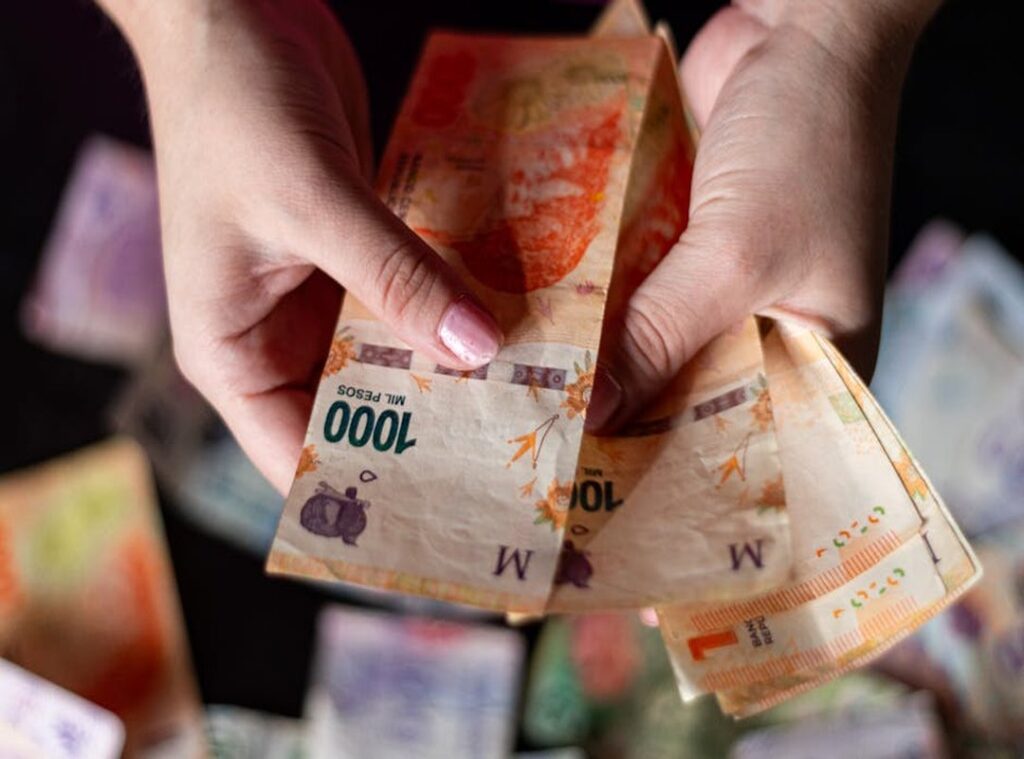
Converting 1000 bolívares venezolanos to pesos chilenos can be a bit of a puzzle. You might be wondering, why even bother? Well, if you’re traveling or doing business between Venezuela and Chile, it’s a must.
The exchange rate changes all the time, so you need to stay on top of it. I’ll walk you through the process step by step. Trust me, it’s not as complicated as it seems.
Let’s get started.
Understanding the Current Exchange Rate
The most recent exchange rate for 1 VEF to CLP is something you should check regularly, as it can fluctuate. Inflation plays a big role in this. High inflation in Venezuela can devalue the bolívar, making it worth less compared to the Chilean peso.
Economic policies also matter. Government decisions in both countries can impact how their currencies perform. For instance, changes in interest rates or trade policies can make one currency more attractive than the other.
Market conditions are another key factor. Things like investor sentiment and global economic trends can affect the exchange rate. If there’s a lot of uncertainty, people might move their money to what they see as safer currencies.
Historically, the Venezuelan bolívar has faced significant devaluation due to hyperinflation and economic instability. The Chilean peso, on the other hand, has been more stable, but it’s not immune to market fluctuations.
To give you a better idea, let’s look at 1000 bolívares venezolanos a pesos chilenos. This conversion will show you the real impact of the current exchange rate.
So, what should you do? Keep an eye on the latest economic news from both countries. Stay informed about any policy changes that could affect the currencies.
And if you’re planning to convert or invest, consider consulting with a financial advisor to make the best decision.
Step-by-Step Conversion Process
First things first, you need to get the latest exchange rate. It’s crucial for an accurate conversion. Check out reliable financial news sites or your bank’s website for the most up-to-date rates.
Next, let’s do the math. The formula is simple: multiply the amount in VEF by the current exchange rate to get the equivalent in CLP. For example, if the rate is 1 VEF = 0.00025 CLP, then 1000 VEF would be 1000 * 0.00025 = 0.25 CLP.
Now, you might be thinking, “Is this right?” Good question. To verify, use an online currency converter. Just type in 1000 bolívares venezolanos a pesos chilenos and see if it matches your calculation.
If you’re still unsure, consider talking to a financial advisor. They can provide a second opinion and help you understand the nuances of the conversion.
By following these steps, you’ll have a solid grasp of how to convert VEF to CLP. Keep it simple, and always double-check.
Practical Tips for Currency Conversion
When it comes to converting currencies, using the right tools can make a big difference. I recommend trusted online platforms and apps like XE or OANDA for real-time currency conversion. They’re reliable and easy to use.
Avoiding fees is crucial. One way to minimize transaction fees is by using local ATMs. They often offer better exchange rates than currency exchange kiosks.
Also, choose a financial service provider that offers low or no foreign transaction fees. It can save you a lot of money in the long run.
Staying informed is key. Keep an eye on economic news and trends. Things like interest rate changes, political events, and even natural disasters can affect exchange rates.
For example, if you’re looking to convert 1000 bolívares venezolanos a pesos chilenos, knowing the latest economic updates can help you get a better deal.
Understanding how these factors work can be tricky. But don’t worry. If you need more clarity on complex topics, check out resources like understanding zero knowledge proofs in simple terms.
It’s all about breaking down confusing concepts into simpler language.
Common Challenges and Solutions

Rate Fluctuations: Exchange rate fluctuations can really mess with your plans. You might think you’ve got a good deal, but the next day, it’s a different story. To manage this, keep an eye on the trends.
Use tools like financial news apps or set up alerts for specific rates. This way, you can act fast when the time is right.
Currency Restrictions: In places like Venezuela and Chile, there can be some serious restrictions. For example, converting 1000 bolívares venezolanos a pesos chilenos isn’t always straightforward. Regulations can change, and you need to stay informed.
Check with local banks or financial advisors to get the latest info. They can help you navigate the rules and find the best options.
Emergency Situations: What if you need to convert currency quickly? Say, during a travel emergency, and first, don’t panic.
Look for ATMs that offer good exchange rates. Sometimes, using a credit card can also be a better option. Just make sure to check for any hidden fees.
Pro tip: Always carry a bit of cash in a widely accepted currency, like US dollars. It can be a lifesaver in a pinch.
Real-World Applications and Scenarios
Travel can be a headache, especially when you’re trying to figure out how much things cost in a different currency. Let’s say you’re planning a trip to Chile and you need to convert 1000 bolívares venezolanos a pesos chilenos. Most people just use an app or online converter, but that’s not always the best way.
Why? Because those tools often don’t give you the real rate. They might add a markup, and you end up paying more than you should.
Do your research. Find a reliable source that gives you the actual exchange rate.
Businesses face even more challenges. When you’re dealing with international trade, every little bit counts. You can’t afford to lose money on bad conversions.
Some companies stick to one or two big banks for all their transactions. That’s a mistake, and banks love to charge high fees.
Instead, look into smaller, specialized services. They often offer better rates and lower fees.
Investors, too, need to be sharp. Diversifying your portfolio with foreign investments is smart. But if you’re not careful, you could end up losing on the conversion.
Don’t just follow the crowd, and look at the long-term trends. Sometimes, it’s better to hold off on a conversion and wait for a more favorable rate.
Patience can save you a lot of money.
Mastering the Art of Currency Conversion
Converting 1000 bolívares venezolanos a pesos chilenos requires attention to detail and the use of reliable sources. First, find the current exchange rate between VEF and CLP. Use reputable financial websites or apps for this information.
Always check the date of the exchange rate to ensure it’s recent.
Understanding the conversion process is key. Multiply the amount in VEF by the current exchange rate to get the equivalent in CLP. Keep in mind that rates can fluctuate, so timing is crucial.
Stay informed about economic conditions in both Venezuela and Chile, as these can affect the value of their currencies. This knowledge helps in making more accurate and timely conversions.
Apply what you’ve learned to make better financial decisions. Being prepared and knowledgeable about currency conversion can save you money and reduce stress in your financial transactions.
 Jason L. has opinions about gadget trends and emerging tools. Informed ones, backed by real experience — but opinions nonetheless, and they doesn't try to disguise them as neutral observation. They thinks a lot of what gets written about Gadget Trends and Emerging Tools, Expert Insights, Buzzworthy Data Encryption Protocols is either too cautious to be useful or too confident to be credible, and they's work tends to sit deliberately in the space between those two failure modes.
Reading Jason's pieces, you get the sense of someone who has thought about this stuff seriously and arrived at actual conclusions — not just collected a range of perspectives and declined to pick one. That can be uncomfortable when they lands on something you disagree with. It's also why the writing is worth engaging with. Jason isn't interested in telling people what they want to hear. They is interested in telling them what they actually thinks, with enough reasoning behind it that you can push back if you want to. That kind of intellectual honesty is rarer than it should be.
What Jason is best at is the moment when a familiar topic reveals something unexpected — when the conventional wisdom turns out to be slightly off, or when a small shift in framing changes everything. They finds those moments consistently, which is why they's work tends to generate real discussion rather than just passive agreement.
Jason L. has opinions about gadget trends and emerging tools. Informed ones, backed by real experience — but opinions nonetheless, and they doesn't try to disguise them as neutral observation. They thinks a lot of what gets written about Gadget Trends and Emerging Tools, Expert Insights, Buzzworthy Data Encryption Protocols is either too cautious to be useful or too confident to be credible, and they's work tends to sit deliberately in the space between those two failure modes.
Reading Jason's pieces, you get the sense of someone who has thought about this stuff seriously and arrived at actual conclusions — not just collected a range of perspectives and declined to pick one. That can be uncomfortable when they lands on something you disagree with. It's also why the writing is worth engaging with. Jason isn't interested in telling people what they want to hear. They is interested in telling them what they actually thinks, with enough reasoning behind it that you can push back if you want to. That kind of intellectual honesty is rarer than it should be.
What Jason is best at is the moment when a familiar topic reveals something unexpected — when the conventional wisdom turns out to be slightly off, or when a small shift in framing changes everything. They finds those moments consistently, which is why they's work tends to generate real discussion rather than just passive agreement.